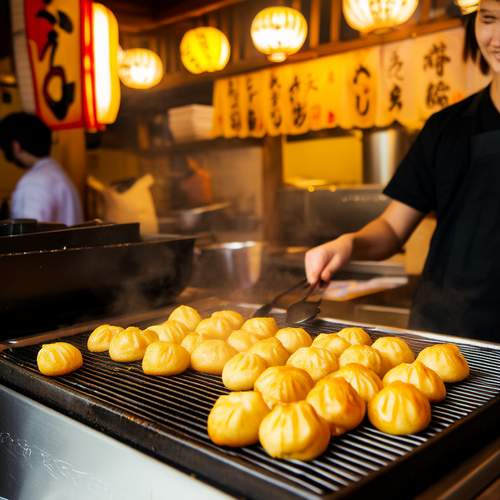
The sizzling sound of takoyaki batter hitting a hot iron griddle is unmistakable to anyone who has wandered the streets of Osaka. This iconic Japanese street food, with its crispy exterior and molten center, relies heavily on the precise thermal conductivity of its batter. The science behind how takoyaki batter conducts and retains heat is a fascinating interplay of ingredients, cooking techniques, and cultural tradition.
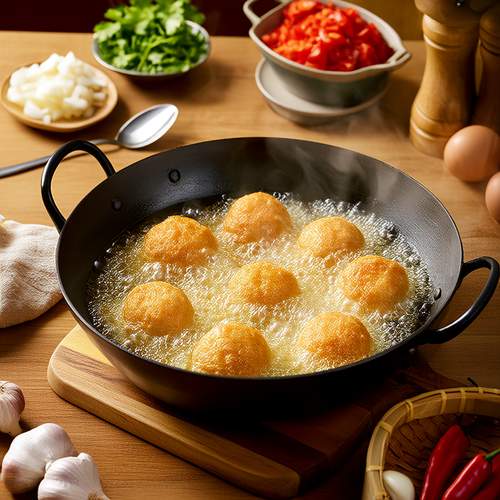
At its core, takoyaki batter is a simple mixture of flour, dashi stock, eggs, and water. Yet, the way this combination responds to heat is anything but straightforward. When poured into the hemispherical molds of a takoyaki pan, the batter begins to cook almost immediately. The high water content in the dashi stock ensures rapid heat transfer from the scorching cast iron to the entire batter matrix. This creates a quick-setting outer shell while leaving the interior delightfully gooey.
The role of starch gelatinization in this process cannot be overstated. As the batter heats, wheat starch granules absorb liquid and swell at around 60°C (140°F), forming a gel-like structure. This transformation is crucial for creating takoyaki's signature texture gradient - from the crisp, golden-brown surface to the creamy, almost liquid center. The gelatinized starch also acts as a thermal buffer, slowing heat penetration to the core and preventing overcooking.
Professional takoyaki chefs manipulate this conductivity through precise temperature control. Traditional cast iron pans, often heated to 180-200°C (356-392°F), provide the ideal thermal mass for consistent cooking. The iron's excellent heat distribution prevents hot spots that could cause uneven cooking, while its heat retention allows for rapid surface setting when fresh batter is added.
Dashi stock serves a dual purpose in thermal regulation. Beyond flavor, its water content controls the batter's heat absorption rate. A proper dashi-to-flour ratio ensures the batter conducts enough heat to cook through without becoming dry or cake-like. The amino acids in dashi, particularly from kombu seaweed and katsuobushi, may also influence the Maillard reaction - the chemical process that creates takoyaki's complex browned flavors and colors.
The cooking technique itself plays with thermal conductivity in remarkable ways. Skilled vendors constantly rotate the developing balls with metal picks, exposing new batter surfaces to direct heat. This manual process creates multiple thin, crispy layers rather than one thick crust. Each turn allows heat to penetrate deeper while the previous layer's conductivity changes as it cools slightly in the air.
Modern innovations have introduced new considerations in batter conductivity. Some shops now use pans with different metal alloys or non-stick coatings that alter heat transfer rates. Pre-mixed commercial batters often contain modified starches or leavening agents that change how heat moves through the mixture. Yet purists argue these shortcuts sacrifice the delicate balance only achievable through traditional methods.
Understanding takoyaki batter's thermal properties extends beyond restaurant kitchens. Food scientists study its behavior to improve cooking appliances, while home cooks experiment with ingredient ratios to replicate street food magic. The humble takoyaki's heat conduction exemplifies how Japanese culinary tradition harmonizes with fundamental physics - all to create that perfect bite of crisp, creamy, umami-packed delight.
As takoyaki continues gaining global popularity, its batter's unique thermal properties face new challenges. Different ambient temperatures, altitude variations, and substitute ingredients all affect how heat travels through the mixture. Perhaps this is why truly exceptional takoyaki remains rooted in Osaka - where generations of vendors have perfected reading the subtle cues of bubbling batter and adjusting their technique accordingly.
The next time you watch a takoyaki master at work, observe not just the flipping technique but the precise timing. That rhythm isn't just showmanship - it's the careful manipulation of thermal conductivity, turning simple batter into one of Japan's most beloved culinary treasures. From the first pour to the final garnish, every step is a calculated dance with heat.
By /May 26, 2025
By /May 26, 2025
By /May 26, 2025
By /May 26, 2025
By /May 26, 2025
By /May 26, 2025
By /May 26, 2025
By /May 26, 2025
By /May 26, 2025
By /May 26, 2025
By /May 26, 2025
By /May 26, 2025
By /May 26, 2025
By /May 26, 2025
By /May 26, 2025
By /May 26, 2025
By /May 26, 2025
By /May 26, 2025
By /May 26, 2025
By /May 26, 2025